
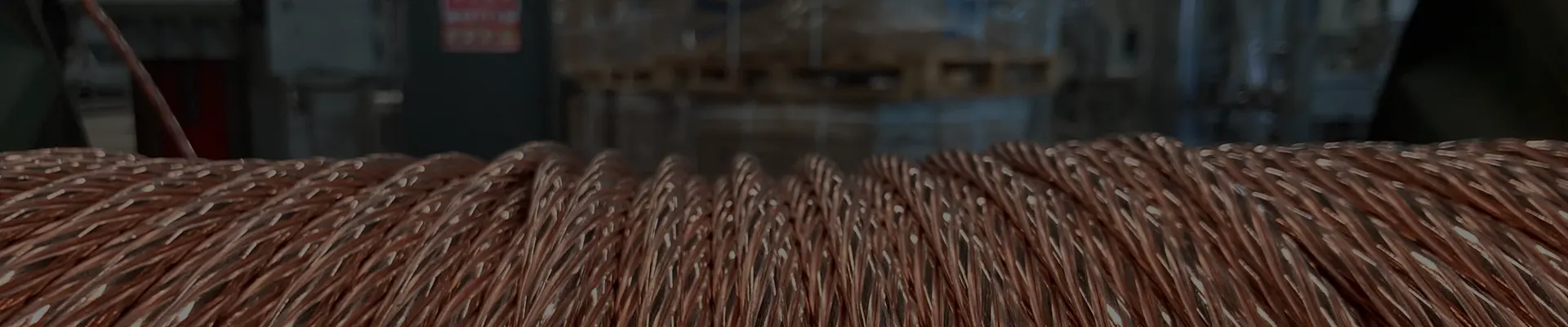
Control cables are multi-core electrical cables used for signal transmission, control circuits, and low-power distribution in industrial systems. They typically operate at rated voltages of 300/500 V or 450/750 V and are designed for reliable signal integrity, flexibility, and electromagnetic compatibility (EMC). A standard control cable consists of annealed copper conductors, PVC/XLPE insulation, optional shielding (copper tape/braid), and a protective sheath (PVC or LSZH). Common standards include IEC 60227, IEC 60502-1, and VDE 0250, ensuring performance in automation, instrumentation, and power control applications.
| Parameter | PVC Control Cable | XLPE Control Cable | Shielded Control Cable (KVVP) |
|---|---|---|---|
| Standard | IEC 60227 / IEC 60502-1 | IEC 60502-1 | IEC 60502-1 / VDE 0250 |
| Rated Voltage | 300/500 V, 450/750 V | 0.6/1 kV | 450/750 V |
| Conductor Material | Annealed Copper (Class 1/2/5) | Annealed Copper | Annealed Copper |
| Insulation Material | PVC | XLPE | PVC |
| Max Operating Temp | 70°C | 90°C | 70°C |
| Shielding | Optional | Optional | Copper tape/braid (mandatory) |
| Core संख्या | 2 – 61 cores | 2 – 37 cores | 2 – 61 cores |
| Fire Performance | Standard / FR optional | Improved | Flame Retardant |
| Application | General control wiring | Higher load environments | EMI-sensitive systems |
Material: Annealed copper (solid, stranded, or flexible Class 5)
Function: Ensures stable signal or low-power transmission
PVC: Standard insulation for general-purpose control
XLPE: Higher thermal and electrical performance
Types: Copper tape, copper braid, or aluminum foil
Purpose: Protects against electromagnetic interference (EMI)
Materials: PVC, Flame Retardant (FR), or Low Smoke Zero Halogen (LSZH)
Function: Environmental and mechanical protection
| Model Code | Description | Key Features |
|---|---|---|
| KVV | PVC insulated & sheathed control cable | Standard, unshielded |
| KVVP | PVC insulated, shielded control cable | Copper tape/braid shielding |
| KVVP2 | PVC insulated, copper tape shield | Enhanced EMI protection |
| KVVR | Flexible control cable | Fine-stranded conductor |
| KYJV | XLPE insulated control cable | Higher temperature rating |
| KVV22 | Armored control cable (steel tape armor) | Mechanical protection |
| KVVP2-22 | Shielded + armored control cable | EMI + mechanical resistance |
Define Control System Requirements
Determine signal type (analog/digital) and voltage level (≤ 750 V).
Select Core Number and Cross Section
Typical sizes: 0.5 mm² – 10 mm²
Choose based on current and voltage drop constraints.
Choose Shielding Type
Use shielded cables (KVVP) for PLC, instrumentation, or VFD systems.
Determine Flexibility Needs
Use KVVR (flexible) for moving equipment or cable trays with bending.
Assess Environmental Conditions
High ताप or load → choose XLPE (KYJV)
Fire-sensitive areas → use LSZH sheath
Select Mechanical Protection
Underground or الصناعية environments → choose armored types (KVV22)
Verify Compliance and Testing
IEC 60227 / IEC 60502
Flame test: IEC 60332
Halogen test: IEC 60754
PLC control panels, sensors, actuators
Require shielded cables for signal integrity
Control circuits for switchgear and protection systems
Often use armored + shielded cables
HVAC, elevators, lighting control
Prefer LSZH cables for safety compliance
| Feature | Control Cable | Power Cable |
|---|---|---|
| Function | Signal/control transmission | Power transmission |
| Voltage Level | ≤ 750 V | Up to 1 kV (LV) or higher |
| Core Count | Multi-core (up to 61 cores) | عادة 1–5 cores |
| Current Capacity | Low | High |
| Shielding | Common | Rare |
Conductor Resistance Test (IEC 60228)
Insulation Thickness & Uniformity Check
Shielding Coverage Verification (≥ 80% for braid)
Voltage Withstand Test (e.g., 2–3 kV for 5 min)
Flame Retardancy Test (IEC 60332-1)
CNSHOPT team will generally respond to your message within eight hours. If it is a weekend or a Chinese statutory holiday, there will be a delay.
We prefer you to contact us via email : info@cnshopt.com. In case of emergency, you can directly contact our WhatsApp account. If you do not receive our reply within 24 hours, please check your spam mailbox, it may appear there. We hope you will add our email to your trust list.
