
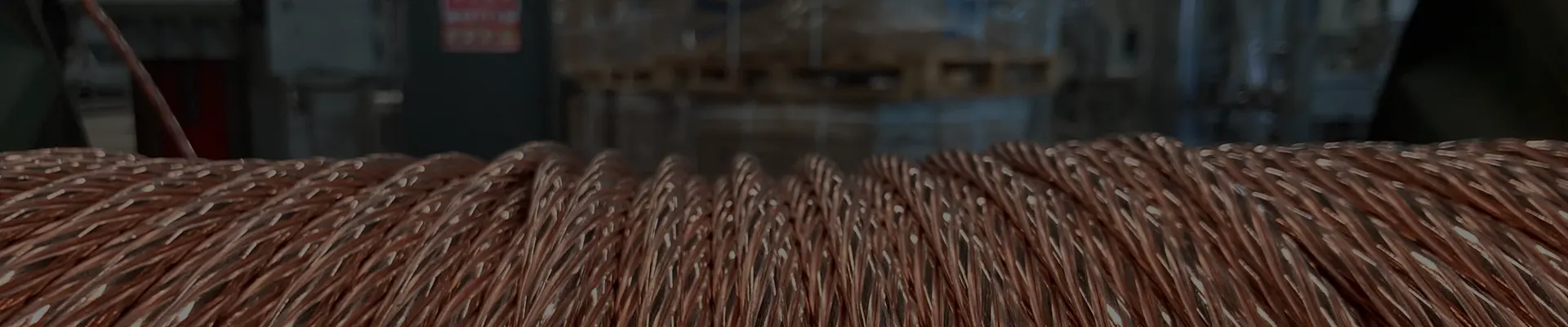
ACSR (Aluminum Conductor Steel Reinforced) is a stranded conductor consisting of hard-drawn aluminum wires helically stranded around a central galvanized steel core. It is designed for overhead transmission and distribution lines, combining high tensile strength (steel core) with good electrical conductivity (aluminum layers). Typical standards include IEC 61089, ASTM B232, and BS 215. Key specifications cover cross-sectional area, stranding configuration, diameter, tensile strength, current capacity, and resistance, making ACSR suitable for long-span, high-load applications.
| Parameter | Typical Range / Value | Notes |
|---|---|---|
| Standard | IEC 61089 / ASTM B232 / BS 215 | International compliance |
| Conductor Type | Stranded (Al + Steel Core) | Composite structure |
| Nominal Cross Section | 16 mm² – 1250 mm² | Wide application range |
| Stranding Configuration | 6/1, 12/7, 24/7, 30/7, 54/7 | Aluminum/Steel ratio |
| Outer Diameter | 5 mm – 40 mm | Depends on configuration |
| DC Resistance (20°C) | 0.028 – 1.8 Ω/km | Varies with size |
| Tensile Strength | 15 kN – 300 kN | Critical for long spans |
| Current Carrying Capacity | 100 A – 1500 A | Based on ambient conditions |
| Operating Temperature | Up to 75°C (standard) | Can reach 85–100°C (HTLS variants) |
| Weight | 50 – 4000 kg/km | Influences sag and tower design |
Material: Hard-drawn aluminum (EC grade)
Function: Primary current-carrying component
Feature: Lightweight with good conductivity (~61% IACS)
Material: Galvanized steel wires
Function: Provides mechanical strength and sag control
Options: Single or multiple steel strands depending on design
Concentric lay structure ensures flexibility and mechanical balance
Common configurations:
6/1: Light-duty distribution
26/7 or 30/7: Transmission lines
54/7: Extra high strength applications
Determine Line Voltage and Current Requirements
Match conductor ampacity to system load (use IEEE/IEC ampacity models).
Calculate Mechanical Load Conditions
Consider span length, wind pressure, and ice loading.
Select Steel Core Ratio
Higher steel content = higher tensile strength but lower conductivity.
Verify Sag and तनाव Limits
Ensure sag complies with clearance regulations.
Use stringing tension ≤ 20% of rated tensile strength (RTS).
Check Environmental Conditions
Coastal areas → require anti-corrosion grease or coated steel core.
Confirm Standard Compliance
IEC 61089 (international)
ASTM B232 (North America)
Evaluate Installation Constraints
Minimum bending radius: ≥ 18 × conductor diameter
מתאים for overhead, not underground installation
| Code Name | Approx Area (mm²) | Typical Use Case |
|---|---|---|
| Dog | ~100 mm² | Medium distribution lines |
| Panther | ~200 mm² | Sub-transmission |
| Zebra | ~400 mm² | High-voltage transmission |
| Moose | ~500+ mm² | Extra high voltage (EHV) lines |
| Feature | ACSR | AAAC | AAC |
|---|---|---|---|
| Strength | Very High (steel core) | Medium | Low |
| Conductivity | Medium | High | Very High |
| Sag Performance | Excellent | Good | Poor |
| Corrosion Resistance | Moderate | Excellent | Good |
| Best Use | Long spans, heavy loads | Coastal areas | Short दूरी distribution |
Stranding Integrity Check
Ensure uniform lay and no strand breakage
Tensile Strength Test
In accordance with IEC 61089 mechanical requirements.
DC Resistance Test (20°C)
Verify compliance with specified Ω/km values
Galvanization Test (Steel Core)
Zinc coating thickness per ASTM standards
Dimension Verification
Outer diameter and strand count tolerance
CNSHOPT team will generally respond to your message within eight hours. If it is a weekend or a Chinese statutory holiday, there will be a delay.
We prefer you to contact us via email : info@cnshopt.com. In case of emergency, you can directly contact our WhatsApp account. If you do not receive our reply within 24 hours, please check your spam mailbox, it may appear there. We hope you will add our email to your trust list.
